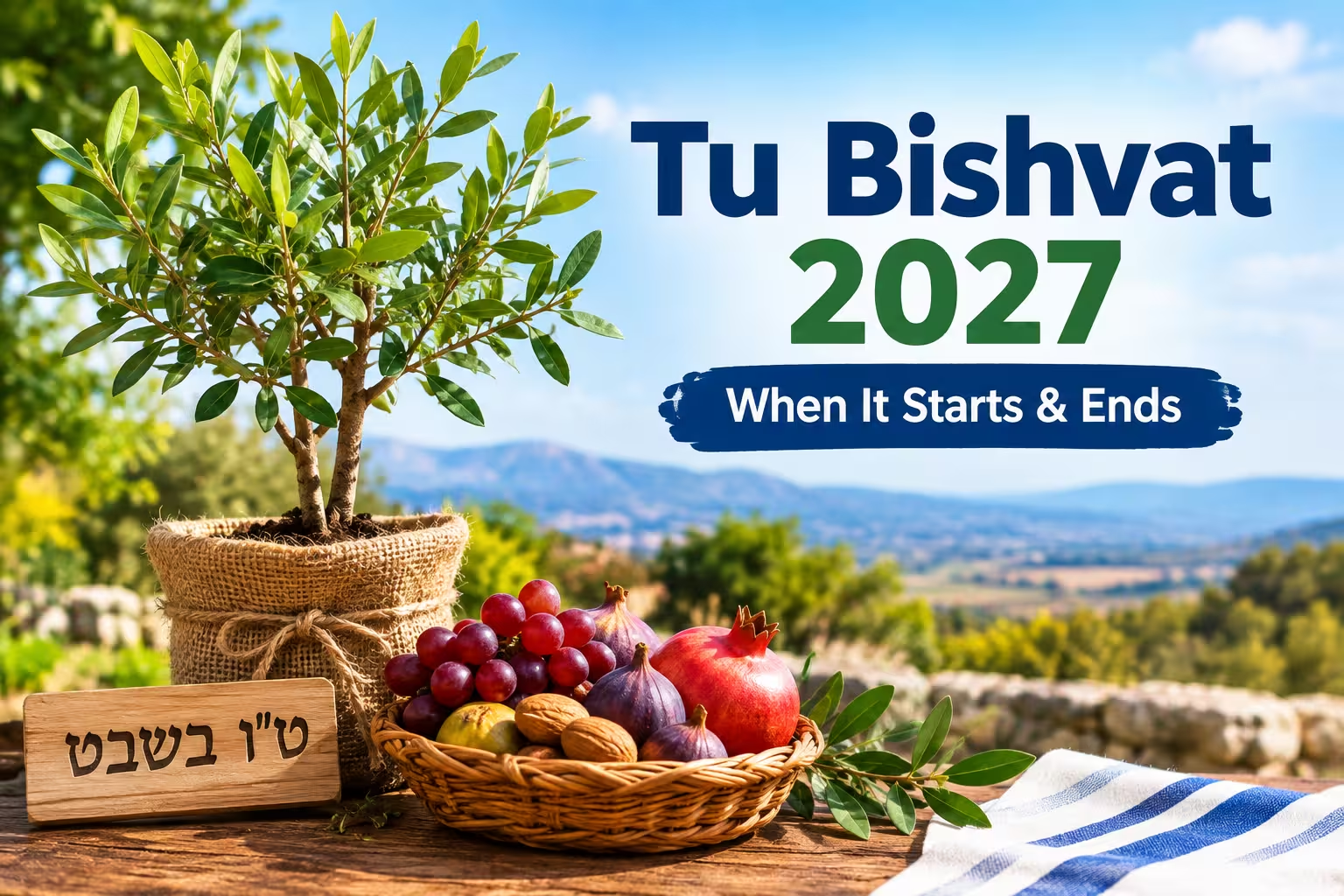
Tu Bishvat 2027 begins at sundown on Friday, January 22, and ends at nightfall on Saturday, January 23. The holiday falls on the 15th day of the Hebrew month of Shevat, which corresponds to Hebrew year 5787, one of four “New Years” mentioned in the Mishnah and historically used as a boundary marker for calculating fruit tithes. hebcal
Also called the “New Year for Trees” (Rosh HaShanah La’Ilanot), Tu Bishvat marks the point in the Israeli agricultural calendar when the earliest-blooming trees wake up from winter dormancy and begin a new fruit-bearing cycle. It’s a minor holiday on the Jewish calendar, but it carries real weight for anyone tracking Jewish observances, planning a seder, or building out a yearly events calendar.
Like all Jewish holidays, Tu Bishvat runs sundown to sundown rather than midnight to midnight. That’s why you’ll see it listed as a two-day span (January 22–23) even though it’s technically a single 24-hour holiday.
When is Tu Bishvat 2027?
The short answer: Tu Bishvat 2027 starts at sundown on Friday, January 22, 2027, and ends at nightfall on Saturday, January 23, 2027.
Because the Hebrew calendar is lunisolar (based on both moon cycles and solar years), Tu Bishvat’s Gregorian date shifts every year — typically landing anywhere from mid-January to mid-February. The date is fixed at the 15th of Shevat every year, but that Hebrew date doesn’t map to a fixed Gregorian date. In 2027, it lands earlier in the season than in 2026, when it fell in early February. Wikipedia
If you’re a farmer, gardener, or just tracking the date for personal reasons, keep in mind that Tu Bishvat originally served as the cutoff date for classifying which “year” a fruit tree’s produce belonged to for the purpose of Temple offerings and tithing. That agricultural function still shapes how the holiday is discussed in religious contexts today, even though modern celebrations lean more environmental and cultural. myjewishlearning
Tu Bishvat 2027 Calendar: Complete Date Overview
Here’s the full breakdown for quick reference:
| Detail | Information |
|---|---|
| Holiday begins | Sundown, Friday, January 22, 2027 |
| Holiday ends | Nightfall, Saturday, January 23, 2027 |
| Hebrew date | 15 Shevat 5787 |
| Day of the week (main day) | Saturday (coincides with Shabbat) |
| Holiday type | Minor Jewish holiday |
| Federal/civil holiday status | Not a US federal or state holiday |
One detail worth flagging for 2027 specifically: the 15th of Shevat marks the beginning of a “new year” for trees, the season when the earliest-blooming trees in the Land of Israel emerge from winter dormancy — and in 2027, the main day of Tu Bishvat falls on a Saturday, meaning it overlaps with Shabbat. That overlap affects how some communities structure their Tu Bishvat seder, since Shabbat customs and Tu Bishvat customs both apply on the same day. buffalojewishfederation
For anyone building out a full-year Hebrew calendar or planning ahead, Tu Bishvat 2027 sits between Purim (which follows about a month later) and the tail end of winter — making it a useful seasonal marker even outside religious observance.
Tu Bishvat 2027: Work and Holiday Observance Rules
Tu Bishvat is not a legal public holiday in the United States, Israel, or most other countries. Schools, government offices, and most businesses remain open on January 22–23, 2027, including in Israel, where it’s a working day.
That said, observance varies by community and individual:
- Religious schools and synagogues often hold special programming, tree-planting events, or a Tu Bishvat seder in the days surrounding the holiday.
- Observant individuals may avoid mourning-related practices (like fasting or eulogies) on the day itself, since it’s traditionally treated as a minor festive occasion.
- Workplaces generally don’t offer time off for Tu Bishvat, though employees who wish to attend evening or synagogue events can typically request the time informally.
- In Israel, public schools often hold tree-planting ceremonies during school hours even though it isn’t an official day off.
If you’re an employer or HR professional building out a 2027 calendar, it’s reasonable to note Tu Bishvat as a cultural observance rather than a day requiring schedule changes — similar to how you’d treat other minor religious dates that don’t carry statutory holiday status.
Tu Bishvat 2027 Preparation Checklist
Whether you’re hosting a seder or just want to mark the day meaningfully, here’s what to have ready before sundown on January 22:
- Fruits and nuts associated with Israel. Traditional choices include dates, figs, olives, grapes, pomegranates, and almonds — almonds hold a prominent place in the Tu Bishvat seder because almond trees are believed to be the first to blossom in Israel each year.
- A Tu Bishvat Haggadah. The kabbalists of 16th-century Safed created a Tu Bishvat seder modeled on the Passover seder, complete with readings from the Hebrew Bible and rabbinic literature; printed and digital versions of this text are widely available.
- Four cups of wine or grape juice. The traditional seder calls for four cups moving from white to red, symbolizing the seasonal shift from winter to spring.
- A tree-planting plan. If you’re in a climate that allows it, planting a tree (or donating to a tree-planting fund in Israel) is one of the most common modern observances.
- Environmental discussion material. Many families use the day to talk about sustainability and conservation, since the holiday has taken on a strong ecological theme in recent decades.
- A calendar note for next year. Because the date shifts annually, it’s worth bookmarking a reliable Hebrew calendar source so you’re not caught off guard in 2028.
FAQs About Tu Bishvat 2027
What is the exact date of Tu Bishvat 2027?
Tu Bishvat 2027 begins at sundown on Friday, January 22, and ends at nightfall on Saturday, January 23, 2027, corresponding to the 15th of Shevat, 5787.
Is Tu Bishvat 2027 a day off work or school?
No. Tu Bishvat is not a federal, state, or nationally recognized public holiday in the US or Israel, so schools and workplaces remain open.
Why does Tu Bishvat fall on a different date every year?
The Hebrew calendar is lunisolar, meaning months are based on the moon while an extra leap month is periodically added to keep pace with the solar year. This causes Jewish holidays, including Tu Bishvat, to shift within a roughly monthlong window on the Gregorian calendar each year.
What foods are eaten on Tu Bishvat?
The most common foods are the “Seven Species” associated with the biblical land of Israel — wheat, barley, grapes, figs, pomegranates, olives, and dates — along with almonds and carob, which became popular additions in the traditional Tu Bishvat seder.
Does Tu Bishvat 2027 overlap with any other Jewish holiday?
The main day, Saturday, January 23, 2027, coincides with Shabbat. It doesn’t overlap with any other major Jewish holiday that year.
Is Tu Bishvat the same as Rosh Hashanah?
No. Rosh Hashanah is the civil new year on the Jewish calendar, celebrated in the fall. Tu Bishvat is specifically the “new year for trees,” used historically to calculate the age of fruit trees for tithing purposes.