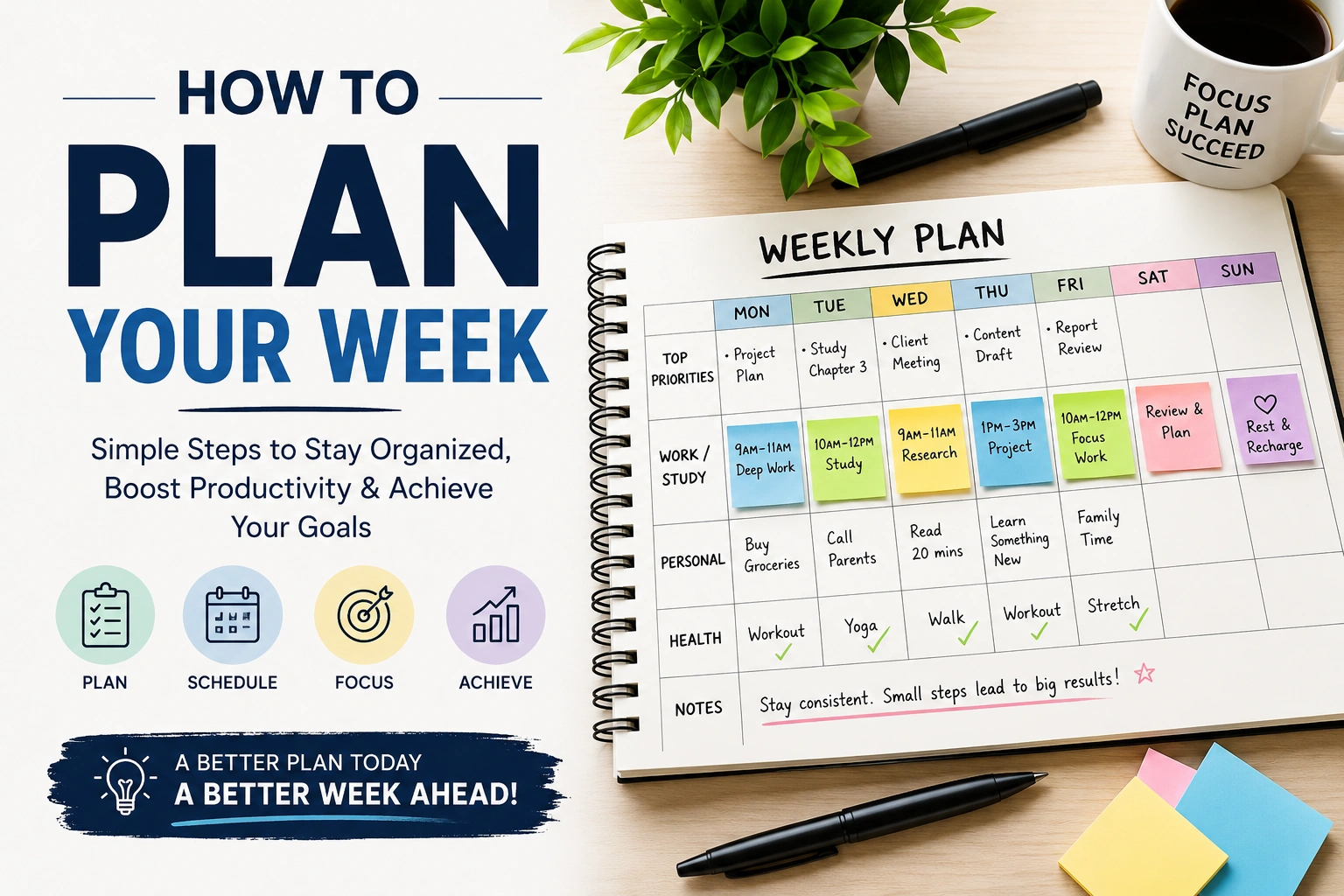
Have you ever reached Friday wondering where all your time went?
Many people start Monday with good intentions but quickly become overwhelmed by emails, meetings, unexpected tasks, and distractions. Instead of making progress on important goals, they spend the week reacting to whatever seems most urgent.
Learning how to plan your week changes that.
A weekly plan helps you focus on what matters most, reduces stress, improves productivity, and gives you a clear direction before the week even begins. Whether you’re a student, employee, freelancer, entrepreneur, or business owner, spending just 20–30 minutes planning your week can dramatically improve your results.
In this guide, you’ll learn a practical weekly planning system that actually works.
Also see: 2026 Weekly Planner Template Google Docs
Why Weekly Planning is Important
Weekly planning gives you a bird’s-eye view of your responsibilities instead of forcing you to make decisions every morning.
Benefits include:
- Better time management
- Less stress and anxiety
- Higher productivity
- Improved work-life balance
- Fewer missed deadlines
- Better focus on long-term goals
- Reduced procrastination
Instead of asking yourself, “What should I do today?” you already know your priorities before the week begins.
How to Plan Your Week
Step 1: Review Last Week
Every successful week starts by reviewing the previous one.
Ask yourself:
- What did I complete?
- What tasks were delayed?
- What distracted me?
- What worked well?
- What should I improve next week?
This simple reflection helps you avoid repeating mistakes and build better habits over time. Most high-performing weekly planning systems begin with this review because it provides valuable insights before creating a new schedule.
Step 2: Write Down Everything You Need to Do
Before prioritizing, perform a “brain dump.”
Write down:
- Meetings
- Assignments
- Appointments
- Work projects
- Personal errands
- Household chores
- Bills
- Fitness goals
- Family activities
Don’t organize yet.
Just get everything out of your head.
This reduces mental clutter and makes planning much easier.
Step 3: Choose Your Top Priorities
Not everything deserves equal attention.
Identify your three to five most important outcomes for the week.
Ask:
“If I only accomplish three things this week, what should they be?”
These become your weekly priorities.
Everything else becomes secondary.
Many productivity experts recommend focusing on only a few high-impact goals instead of creating endless to-do lists.
Step 4: Add Fixed Commitments First
Open your calendar and block time for commitments that cannot be moved.
Examples include:
- Meetings
- School classes
- Medical appointments
- Church services
- Client calls
- Family events
These form the framework of your week.
Step 5: Schedule Important Work During Your Peak Hours
Everyone has hours when they perform best.
Some people think clearly in the morning.
Others work better during the afternoon or evening.
Reserve your most productive hours for:
- Deep work
- Studying
- Writing
- Strategic planning
- Creative tasks
Avoid wasting your best energy on emails or social media.
Step 6: Use Time Blocking
Time blocking means assigning specific hours to specific tasks.
Instead of writing:
- Finish report
Schedule:
- Monday 9:00–11:00 AM — Complete report
Instead of:
- Study biology
Schedule:
- Tuesday 6:00–8:00 PM — Biology revision
Time blocking removes guesswork and reduces procrastination. It is one of the most recommended productivity techniques in modern weekly planning guides.
Step 7: Leave Buffer Time
Don’t schedule every minute.
Unexpected events always happen.
Leave empty spaces between major tasks for:
- Phone calls
- Urgent work
- Delays
- Rest
A flexible plan is more sustainable than a perfect one.
Step 8: Review Your Plan Every Day
Weekly planning doesn’t end on Sunday.
Spend five minutes each morning reviewing:
- Today’s priorities
- Meetings
- Deadlines
- Progress
If necessary, adjust your schedule.
Consistency matters more than perfection.
How to Plan Your Week to Be Productive
Productivity isn’t about being busy.
It’s about making meaningful progress.
Here are proven productivity tips:
Focus on Three Big Goals
Choose three important outcomes for the week.
Everything else supports these goals.
Avoid Multitasking
Complete one important task before starting another.
Group Similar Tasks
Batch together:
- Emails
- Phone calls
- Meetings
- Administrative work
This reduces context switching.
Remove Distractions
Turn off unnecessary notifications.
Work in focused sessions.
Review Progress Midweek
On Wednesday evening ask:
- Am I on schedule?
- What needs adjustment?
- What should I prioritize?
Small corrections prevent major problems later.
How to Plan Your Week in Business
Business owners and managers face dozens of competing priorities.
Without planning, urgent work often replaces important work.
Here’s a business-focused weekly planning system.
Set Weekly Business Goals
Examples:
- Acquire five new customers
- Launch a marketing campaign
- Complete payroll
- Finish a client proposal
- Improve customer service
Goals should be measurable.
Review Key Metrics
Check:
- Revenue
- Expenses
- Sales
- Customer feedback
- Website traffic
- Marketing performance
Numbers help you make informed decisions.
Delegate Tasks
You don’t need to do everything yourself.
Assign work based on team strengths.
Delegation increases efficiency.
Schedule Strategy Time
Don’t spend your entire week putting out fires.
Reserve time for:
- Planning
- Innovation
- Staff development
- Business growth
Working on your business is just as important as working in your business.
Hold Weekly Team Meetings
Keep meetings short.
Review:
- Last week’s progress
- Current priorities
- Challenges
- Deadlines
Everyone leaves knowing their responsibilities.
Common Weekly Planning Mistakes
Avoid these common mistakes.
Planning Too Much
Overloaded schedules lead to frustration.
Be realistic.
Ignoring Rest
Rest improves performance.
Schedule breaks.
Not Reviewing Progress
Planning without reviewing rarely works.
Review weekly.
Forgetting Personal Life
Include:
- Family
- Exercise
- Friends
- Hobbies
Success includes balance.
Chasing Perfection
No week goes exactly as planned.
Adapt and continue.
Best Weekly Planning Tools
Whether you prefer digital or paper planning, choose a system you’ll actually use.
Popular options include:
- Google Calendar
- Microsoft Outlook Calendar
- Notion
- Todoist
- Trello
- ClickUp
- Apple Calendar
- A printable weekly calendar
- A paper planner or notebook
The best planner is the one you consistently maintain.
Final Thoughts
Learning how to plan your week is one of the most valuable productivity habits you can develop.
You don’t need an expensive planner or complicated software. All you need is a simple routine:
- Review last week.
- Capture all tasks.
- Prioritize what matters.
- Schedule your time.
- Leave room for flexibility.
- Review your progress.
Whether you’re learning how to plan your week as a student, how to plan your week to be productive, or how to plan your week in business, consistency is the secret. Spending just 20 to 30 minutes each week planning ahead can save hours of wasted time and help you achieve your goals with less stress.
FAQs
What’s the best way to start your week?
The best way to start your week is by planning it before Monday begins. Review your previous week, identify your top priorities, schedule important tasks, and block time on your calendar. Starting with a clear plan helps you stay focused and reduces last-minute stress.
What is the 1-3-5 rule?
The 1-3-5 rule is a simple productivity method that encourages you to complete:
- 1 large task
- 3 medium tasks
- 5 small tasks
This approach keeps your daily workload realistic while ensuring steady progress on important goals.
What are the 7 points of planning?
The seven key points of effective planning are:
- Set clear goals.
- Identify priorities.
- List required tasks.
- Allocate time effectively.
- Gather necessary resources.
- Monitor progress regularly.
- Review results and make improvements.
Following these seven steps helps create a practical, flexible plan that improves productivity week after week.
More useful articles: