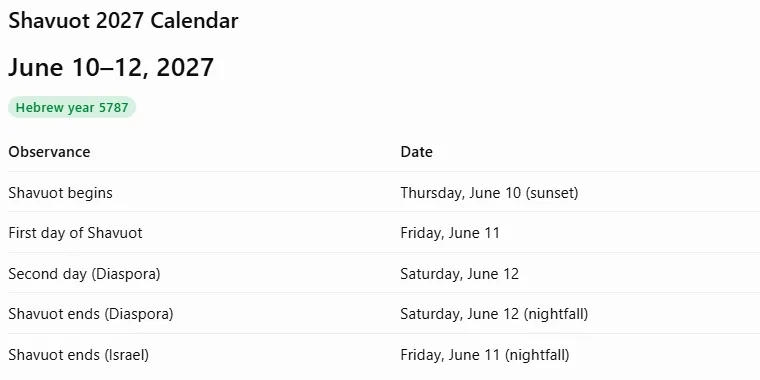
Shavuot 2027 begins at sunset on Thursday, June 10, and ends at nightfall on Saturday, June 12, 2027, in the Jewish diaspora. In Israel, the holiday is observed for one day, from sunset on June 10 until nightfall on Friday, June 11. Shavuot is a major Jewish festival that celebrates the giving of the Torah to the Israelites at Mount Sinai and commemorates the ancient wheat harvest.
Also known as the Feast of Weeks, Shavuot takes place seven weeks after Passover (Pesach). The holiday is marked by special synagogue services, all-night Torah study, dairy foods, flower decorations, and the reading of the Ten Commandments.
Whether you are looking for the Shavuot 2027 dates, the meaning behind the celebration, or traditional ways Jewish communities observe the holiday, this guide covers the essential information.
When Is Shavuot 2027?
Shavuot begins on the evening of Thursday, June 10, 2027, and concludes at nightfall on Saturday, June 12, 2027, outside Israel. The first full day of the festival is Friday, June 11.
In Israel, Shavuot is celebrated for one day, ending on Friday night, June 11.
When Is Shavuot 2027 in Israel?
In Israel, Shavuot 2027 begins at sunset on Thursday, June 10, and ends at nightfall on Friday, June 11.
Unlike Jewish communities outside Israel, which traditionally observe two days of Shavuot, Jewish communities in Israel celebrate the festival for one day. Both observances follow the Hebrew calendar date of 6 Sivan.
What Day of the Week Is Shavuot 2027?
The main day of Shavuot in 2027 falls on Friday, June 11. The second day, observed outside Israel, falls on Saturday, June 12, which also coincides with Shabbat.
7 Important Shavuot Traditions and Customs
Shavuot is celebrated through religious services, family gatherings, traditional foods, and educational activities. Although customs vary between Jewish communities, several practices are widely associated with the festival.
1. Staying Awake All Night to Study the Torah
One of the best-known Shavuot traditions is Tikkun Leil Shavuot, which involves staying awake throughout the first night of the holiday to study the Torah and other Jewish religious texts.
Jewish communities organize special study sessions, lectures, discussions, and prayer gatherings. The practice expresses enthusiasm for receiving the Torah and strengthening one’s understanding of Jewish teachings.
2. Reading the Ten Commandments
The reading of the Ten Commandments is one of the central religious activities during Shavuot. Synagogues read the biblical account of the Israelites receiving the commandments at Mount Sinai.
Many Jewish families attend synagogue services together, and some communities encourage children to participate. The reading reminds worshippers of the importance of the Torah in Jewish life and faith.
3. Eating Dairy Foods
Eating dairy products is a popular Shavuot custom. Families prepare special meals featuring cheesecake, cheese blintzes, milk-based desserts, and other dairy dishes.
There are several traditional explanations for this practice. One interpretation connects the custom to the Israelites receiving the Torah and learning the dietary laws, while other explanations associate dairy with the symbolic nourishment and sweetness of the Torah.
Popular Shavuot foods include:
- Cheesecake
- Cheese blintzes
- Cheese-filled pastries
- Milk-based desserts
- Cheese kugel
- Dairy-based casseroles
Not every Jewish community follows exactly the same food traditions, but dairy dishes are particularly popular during the festival.
4. Decorating Homes and Synagogues With Flowers
Many Jewish communities decorate their homes and synagogues with flowers, greenery, and plants during Shavuot. These decorations reflect the agricultural origins of the festival and the traditional association of Mount Sinai with flowering greenery.
The colorful decorations also create a festive atmosphere for religious services and family celebrations. Some communities use flowers to symbolize spiritual growth and the beauty of the Torah.
5. Reading the Book of Ruth
Reading the Book of Ruth is another important Shavuot tradition. The biblical story follows Ruth, a Moabite woman who demonstrates loyalty, kindness, and commitment to her mother-in-law, Naomi.
The story is associated with Shavuot because it takes place during the barley and wheat harvest seasons. Ruth’s journey also highlights themes of faith, generosity, acceptance, and devotion.
Many Jewish communities read the Book of Ruth during synagogue services on Shavuot.
6. Celebrating the Wheat Harvest and First Fruits
Shavuot has deep agricultural roots. In biblical times, it marked the wheat harvest and was associated with bringing the first fruits of the season to the Temple in Jerusalem.
Farmers offered the first produce of their harvest as an expression of gratitude for the land and its abundance. This tradition explains why Shavuot is also called the Festival of the Harvest and the Day of First Fruits.
Today, some Jewish communities organize harvest-themed events, educational programs, and activities celebrating agriculture and the natural environment.
7. Attending Special Synagogue Services
Synagogue services are an important part of Shavuot celebrations. Worshippers gather for special prayers, Torah readings, and religious ceremonies commemorating the giving of the Torah.
In many communities outside Israel, the second day includes the recitation of Yizkor, a memorial prayer for deceased relatives. The services provide an opportunity for reflection, prayer, and community fellowship.
Frequently Asked Questions
When is Shavuot 2027?
Shavuot 2027 begins at sunset on Thursday, June 10, and ends at nightfall on Saturday, June 12, outside Israel. In Israel, it ends on Friday, June 11.
What date is Shavuot in the Hebrew calendar in 2027?
Shavuot falls on 6–7 Sivan 5787 in the Hebrew calendar. The first day is 6 Sivan, corresponding to Friday, June 11, 2027.
How many days is Shavuot celebrated?
Shavuot is celebrated for two days outside Israel and one day in Israel. The difference follows traditional Jewish calendar observances.
What is the greeting for Shavuot?
The traditional Hebrew greeting is “Chag Shavuot Sameach,” meaning “Happy Shavuot.” It is commonly used to wish friends, relatives, and members of the Jewish community a joyful celebration.
Final Thoughts
Shavuot 2027 will be observed from the evening of June 10 through June 12 outside Israel, with a one-day observance in Israel ending on June 11. The festival celebrates the giving of the Torah at Mount Sinai while preserving the agricultural traditions associated with the ancient wheat harvest.
Through Torah study, synagogue services, dairy meals, flower decorations, and family gatherings, Shavuot remains an important occasion for Jewish communities worldwide. Understanding its history and traditions provides a deeper appreciation of its religious, cultural, and spiritual significance.
Sources
For readers who want to explore Shavuot’s history, dates, and religious significance in more detail, the following resources provide useful information:
- Chabad – What Is Shavuot? – Background on the giving of the Torah and traditional celebrations.
- My Jewish Learning – What Is Shavuot? – Explanations of Shavuot traditions, dairy foods, and the Counting of the Omer.
Also see: Complete List of Jewish Holidays in 2027